CDDF Participates in AMMWEC National Coalition Conference on Antisemitism & Hate; Co-Founder Leyla Mammadli Speaks on Women in Peacemaking WASHINGTON, D.C. July 13, 2026
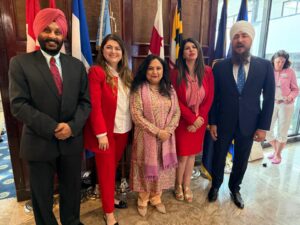
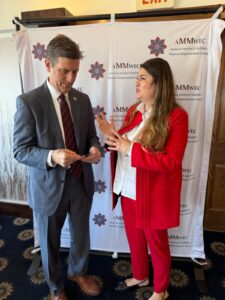
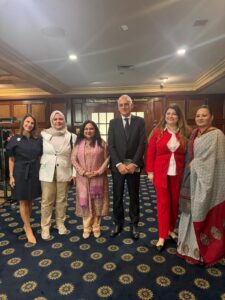
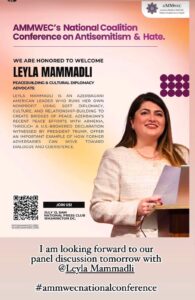
The Cultural Diplomacy and Development Foundation (CDDF) participated in the AMMWEC National Coalition Conference on Antisemitism & Hate, held at the National Press Club in Washington, D.C. The conference brought together policymakers, government representatives, faith leaders, scholars, advocates, journalists, and civil society leaders to address antisemitism, extremism, religious intolerance, and hate while strengthening interfaith cooperation and community-based approaches to peace.
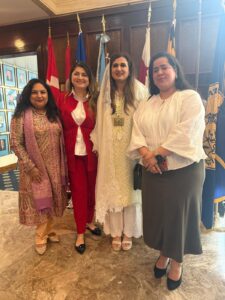
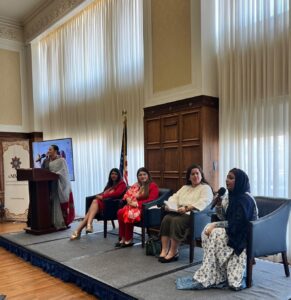
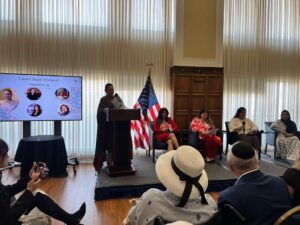
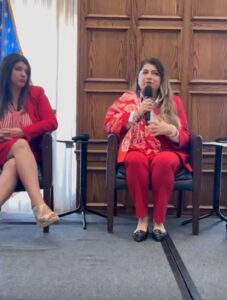
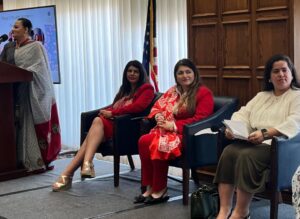
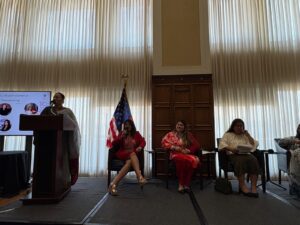
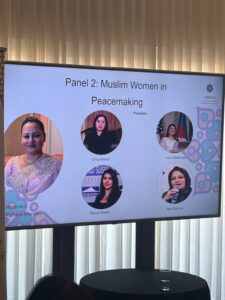
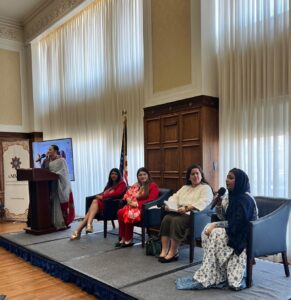
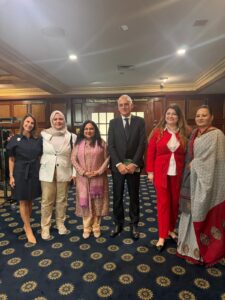
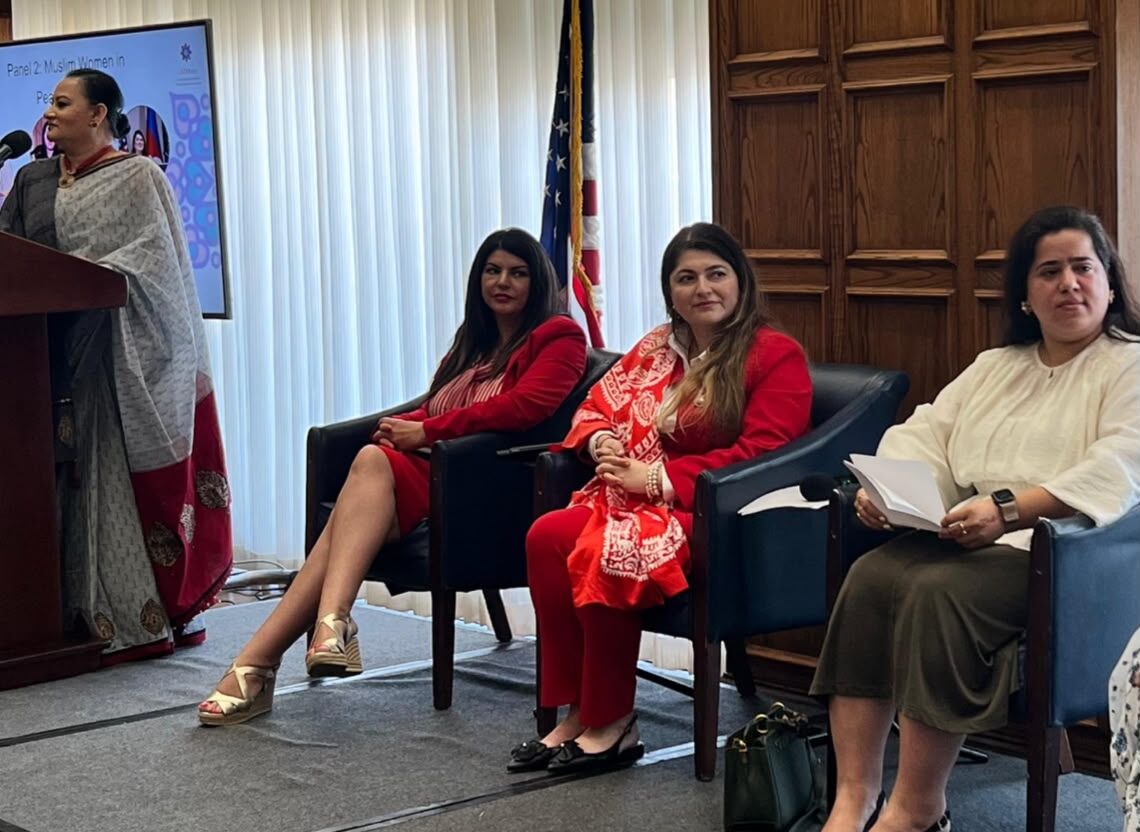
As part of CDDF’s participation, Leyla Mammadli, Co-Founder of the Cultural Diplomacy and Development Foundation, served as a featured speaker on the panel “Muslim Women in Peacemaking.” The panel focused on Muslim women’s leadership in peacemaking, bridge-building, interfaith unity, countering antisemitism, and resisting extremism.
Mammadli joined fellow panelists Lima Anwari, Manel Msalmi, and Dr. Atia Shahnaz. The discussion was moderated by Farhana Khorshed, AMMWEC Board Member and Executive Director of NEBAF.
Women as Bridge-Builders for Peace
During the panel, Mammadli drew upon her personal and professional experience in Azerbaijan, including years of grassroots engagement with communities affected by conflict.
Having witnessed the consequences of war herself, Mammadli emphasized that women frequently become some of the most important peacebuilders within their communities—supporting families, educating children, strengthening community resilience, preserving cultural identity, and helping rebuild trust after conflict.
“Peace agreements may end wars, but people build peace. Women are often among the first peacebuilders in their communities, and their voices must be represented not only at the grassroots level, but also at negotiating tables and in decision-making processes.”
Mammadli stressed that sustainable peace cannot be achieved through government-to-government diplomacy alone. Political agreements must be reinforced by relationships among communities, women, young people, educators, religious leaders, cultural figures, and civil society.
Azerbaijan–Armenia Peace and a New Chapter for the South Caucasus
Mammadli also highlighted the historic progress toward peace between Azerbaijan and Armenia, recalling the August 8, 2025 Washington peace milestone and emphasizing its significance after decades of conflict.
As the first anniversary of the August 8 milestone approaches, Mammadli noted that the South Caucasus has an important opportunity to move beyond the legacy of conflict and toward a future defined by peace, regional cooperation, connectivity, economic development, and people-to-people engagement.
“As someone from Azerbaijan who has personally witnessed the consequences of conflict, the progress toward peace has a deeply personal meaning for me. As we approach the anniversary of the historic August 8 Washington peace milestone, we should recognize not only how far we have come, but also our shared responsibility to protect and strengthen this peace.”
Mammadli emphasized that Azerbaijan is ready for peace and for a new era of regional cooperation, while underscoring that securing lasting peace in the South Caucasus requires commitment, responsibility, and constructive engagement.
“Our responsibility now is to secure peace together and build a South Caucasus where future generations are connected not by conflict, but by cooperation, dialogue, economic opportunity, and mutual respect. Azerbaijan is ready to contribute to building lasting peace, security, and prosperity throughout the region.”
She further stressed that political agreements create the framework for peace, but women, civil society, cultural diplomacy, education, and people-to-people relationships are essential for transforming that framework into sustainable reconciliation.
“Peace must become more than an agreement between governments. It must become a relationship between people. That is the peace we should work together to build in the South Caucasus.”
Azerbaijan’s Experience of Interfaith Coexistence
Addressing the conference’s central theme of combating antisemitism and hate, Mammadli also highlighted Azerbaijan’s longstanding tradition of coexistence among Muslim, Jewish, and Christian communities.
She referenced Azerbaijan’s historic Jewish community and Qırmızı Qəsəbə (Red Village) as an important example of Jewish heritage and community life within a predominantly Muslim country.
Mammadli emphasized that the Azerbaijani experience demonstrates how religious and cultural identities can be preserved while communities live together with mutual respect.
“Peace is not about eliminating our differences. It is about respecting those differences while recognizing our shared humanity.”
She stressed that combating antisemitism must be part of a broader commitment to rejecting hatred, intolerance, and discrimination in all their forms.
Mammadli further highlighted the particular role Muslim women can play in building relationships with Jewish, Christian, and other faith communities through education, cultural exchange, interfaith engagement, and community-level dialogue.
The panel specifically explored how Muslim women can build trust across religious communities at a time of rising antisemitism and hate, as well as practical actions women can take in their own communities to advance peace and resist extremism.
Cultural Diplomacy as a Tool for Sustainable Peace
Mammadli presented cultural diplomacy and people-to-people engagement as essential complements to traditional diplomacy.
She emphasized that art, culture, education, dialogue, and direct human relationships can create channels of communication and understanding even when political relationships are difficult.
Through its programs and partnerships, CDDF works to bring together diplomats, policymakers, scholars, artists, faith leaders, women, young people, and civil society representatives to strengthen intercultural understanding and build sustainable relationships across national, cultural, and religious boundaries.
“Culture can connect people where politics sometimes cannot. Every meaningful conversation, educational initiative, cultural exchange, and relationship we create contributes to the human foundation upon which sustainable peace can be built.”
Advancing Women’s Leadership in Peacebuilding
Mammadli also called for greater representation of women in formal peacebuilding and decision-making processes.
Drawing on her grassroots experience, she emphasized that women should not be viewed solely as beneficiaries of peace initiatives. They should be recognized as leaders, mediators, negotiators, policymakers, and decision-makers capable of shaping peace processes from their earliest stages through post-conflict reconciliation.
Her remarks reflected CDDF’s broader commitment to advancing women’s leadership, cultural diplomacy, intercultural understanding, and grassroots approaches to peacebuilding.
Strengthening the CDDF–AMMWEC Partnership
CDDF expressed its appreciation to AMMWEC for the invitation to participate in the National Coalition Conference and for creating an important platform where Muslim women and other community leaders can contribute directly to national conversations on antisemitism, hate, extremism, interfaith cooperation, and peace.
The conference also provided an opportunity to further strengthen the partnership between CDDF and AMMWEC and explore continued cooperation in women’s leadership, cultural diplomacy, interfaith engagement, education, and peacebuilding.
“We highly appreciate our partnership with AMMWEC and its commitment to bringing communities together against hatred and extremism,” Mammadli said. “CDDF looks forward to strengthening this collaboration and transforming dialogue into meaningful partnerships and practical peacebuilding initiatives.”
About the Cultural Diplomacy and Development Foundation (CDDF)
The Cultural Diplomacy and Development Foundation (CDDF) is a Washington, D.C.-based nonprofit organization dedicated to advancing cultural diplomacy, peacebuilding, intercultural and interfaith dialogue, education, cultural heritage, and international cooperation.
Through partnerships, public programs, research, educational initiatives, and people-to-people engagement, CDDF works to strengthen mutual understanding, encourage dialogue, and build sustainable bridges among communities and nations.